

There are weeks when traders carefully study economic data, analyse central-bank speeches and examine every candle on the chart. Then there are World Cup weeks, when half the dealing room is watching football on a second screen and pretending the sudden shout was caused by the bond market.

This was one of those weeks.
With Spain already through to the final and my beloved England preparing to face Argentina, the markets had to compete with something even more emotionally dangerous than leveraged trading: international football. Nevertheless, there was enough happening to make the average dealer glance away from the television occasionally.
Wall Street remained remarkably composed. By Tuesday’s close, the S&P 500 stood at 7,543 and the Nasdaq at 26,107, helped by softer American inflation, strong bank earnings and renewed enthusiasm for semiconductors. Investors were still happy to buy risk, provided somebody whispered “artificial intelligence” before mentioning the valuation.
ASML raised its outlook, confirming that those selling the equipment for the AI gold rush are doing rather nicely. IBM, however, fell 25% after disappointing guidance. That was a useful reminder that putting “AI” in a presentation does not automatically transform yesterday’s business into tomorrow’s NVIDIA.
The week’s main event was oil. Brent pushed above $85 and WTI towards $80 after renewed American strikes, Iranian retaliation and the reinstatement of a US blockade on Iranian ports. Once again, the Strait of Hormuz became the most closely watched strip of water in the world.

Whatever anybody thinks of Donald Trump, his administration deserves some credit for preventing this from becoming a full-scale energy-price disaster. It is no easy task to drop bombs on an important oil producer while simultaneously asking petrol prices to behave themselves. Let’s be fair, most governments struggle to organise a press conference without losing the sandwiches.
Earlier in the conflict, Trump obtained a coordinated release of 400 million barrels from international emergency reserves, including 172 million barrels from America’s Strategic Petroleum Reserve. His administration used temporary waivers to help keep alternative supplies moving, helped secure the reopening of Hormuz during the June truce and publicly leaned on oil companies when pump prices were not falling quickly enough. This week, Trump also withdrew his proposed 20% charge on ships passing through the strait.
Some of that was political theatre. But markets trade results as well as speeches. Despite blockades, missile exchanges and threats to a route carrying about one-fifth of global oil and LNG, Brent is around $85 rather than $120. Weak Chinese demand, emergency supplies and production elsewhere also helped, so Trump cannot claim the whole medal. Even so, keeping crude below three figures under these conditions is quite a meaningful achievement.
The inflation figures offered further relief. US consumer prices fell 0.4% in June, annual inflation slowed from 4.2% to 3.5%, and core inflation eased to 2.6%. Producer prices also declined 0.3% on the month. That reduced the immediate pressure on the Federal Reserve to raise rates and helped equities recover from Monday’s oil-induced wobble.
Nobody should become too comfortable, though. Cheaper petrol did much of June’s work, and crude has since risen sharply. Inflation data is a photograph of last month, not a live video of today. If oil remains elevated, central bankers will soon start clearing their throats and talking about policy being “appropriately restrictive,” which is their preferred way of ruining lunch.
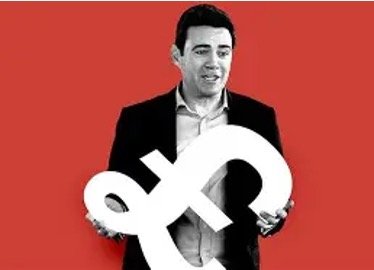
In foreign exchange, softer inflation weakened the dollar before renewed fighting restored some safe-haven demand. The dollar index hovered near 100.97, EUR/USD around $1.142 and sterling close to $1.34. The pound remains firm because markets increasingly think the Bank of England may have to raise rates if expensive energy feeds back into British inflation. But with a new Prime Minister about to walk through the door of No.10, traders should remain very cautious about anything they do in regards to the UK.
Gold traded near $4,068 after bouncing on the softer data. It remains supported by geopolitical uncertainty, although higher oil can lift bond yields, which is less helpful. Gold therefore spent the week behaving like a man being pulled through two different pub doors.
Bitcoin recovered above $65,000 as the dollar softened and rate fears eased. Crypto sentiment remains cautious, however, with Bitcoin ETF flows still negative this year. Once again, Bitcoin behaved less like digital gold and more like a technology share that trades all weekend and never sleeps.
The lesson is straightforward. Markets have absorbed war, oil shocks and political theatre because earnings are respectable, liquidity remains available and inflation has cooled. But resilience is not immunity. Watch oil, yields and the dollar together. If all three rise, equities will eventually notice—even if the traders are busy watching England take penalties.
Please note the political opinions expressed above are those of the author himself, and do not necessarily reflect the opinions of JP Fund Services AS.
The post While Traders Watched the Football, Trump Tried to Bomb Iran Without Blowing Up the Oil Market first appeared on JP Fund Services.
The post While Traders Watched the Football, Trump Tried to Bomb Iran Without Blowing Up the Oil Market first appeared on trademakers.