

Well, it’s been another interesting week in the markets, although after decades of observing capital market events, I’m beginning to wonder whether anything really changes. The faces are different, the numbers are bigger, and the politicians have become considerably more expensive. But the underlying problems? Remarkably familiar for someone who entered the markets in the 70s.
Wall Street has clawed back some of its recent losses, with the S&P 500 closing Tuesday at 7,713 and the Dow gaining 1%. Smaller companies have even started outperforming their larger cousins. Encouraging stuff. But don’t get too carried away. Investors haven’t suddenly fallen in love with equities again; they’re simply becoming a little more particular about what they’re buying.
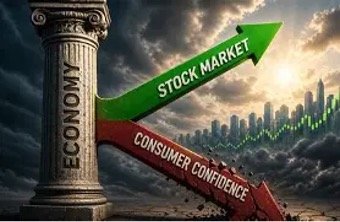
Strong corporate earnings are helping, but the enormous sums being thrown at artificial intelligence are attracting some uncomfortable questions.
Where’s the money coming from? And, perhaps more importantly, when do shareholders actually get some back? Apparently, promising to make billions tomorrow isn’t quite as fashionable as making a few quid today.
Meanwhile, the dollar has softened as US Treasury yields retreat, offering EUR/USD some welcome breathing space. The Federal Reserve is expected to leave rates unchanged at 3.75–4.00% next week, although another increase in December remains a possibility. But before anyone gets too enthusiastic about the euro, perhaps they should take a look at what’s happening across Europe. It’s not particularly pretty.
France, predictably, is providing the fireworks. And they’re certainly not celebrating Bastille Day. Hundreds of thousands have reportedly taken to the streets, protesting about everything from education and living costs to government spending. Some demonstrations have deteriorated into riots, looting and clashes with police, leaving Macron’s increasingly isolated administration reaching for curfews and additional security measures. Hardly the sort of political stability that encourages international investors to open their wallets.
And it’s not just France. Across Italy, Spain, Portugal, Belgium and Albania, public frustration is becoming increasingly difficult for governments to ignore.

Expensive energy, unaffordable housing, inadequate wages and declining living standards are all contributing to the anger.
Italian farmers are particularly unhappy about rising fuel costs, while ordinary households elsewhere are beginning to question why politicians can always find money for another grand initiative or to support millions of immigrants, but apparently struggle when it comes to helping the taxpayers pay the bills.
Different countries, different grievances. Same underlying problem. People are fed up.
Now, I’ve seen plenty of demonstrations over the years, and most eventually disappear from the headlines. What concerns me this time isn’t simply the protests. It’s the financial position of the governments facing them. France is already struggling with considerable public debt and difficult budget negotiations. Political pressure makes meaningful spending cuts even harder, while investors are increasingly questioning whether governments can actually deliver what they’ve promised. French and Italian bonds have come under pressure, with the spread between French and German yields widening. European equities haven’t escaped the uncertainty either.
And here’s the problem Brussels would rather not discuss. European governments have four choices: borrow more, increase taxes, cut spending or allow their finances to deteriorate further. That’s about it. None will make them particularly popular, especially with voters who already feel they’re being squeezed from every direction.
Throw expensive energy into the equation, and the ECB faces another unpleasant balancing act between weak economic growth and persistent inflation. It doesn’t take fifty years in the markets to recognise a difficult situation, although experience certainly helps.
Of course, peaceful protest is perfectly legitimate, but criminal violence is something entirely different. And dismissing the underlying public dissatisfaction would be foolish. Governments can ignore angry voters for a while. Bond investors are generally less accommodating, particularly when they’re being asked to lend increasingly large sums to countries whose finances are heading in the wrong direction.
Elsewhere, Bitcoin continues hovering around $81,000–83,000 as speculative enthusiasm loses some of its sparkle. Gold hasn’t exactly covered itself in glory either, retreating towards $4,120 despite the geopolitical uncertainty. Expectations of higher interest rates are proving a stronger influence than traditional safe-haven demand. Oil, meanwhile, remains troublesome. Brent briefly approached $112 before slipping below $109 as tentative diplomatic hopes surrounding Iran offered some relief. Unfortunately, energy at these levels is hardly going to help inflation, consumers or central bankers.
Britain’s FTSE 100 has eased towards 10,733, with banks and commodity shares weighing on sentiment. Tesla recovered towards $374 amid speculation about a possible SpaceX merger, while NVIDIA hovered around $216. Investors are still enthusiastic about AI but increasingly concerned about how this enormous expansion is being financed. Fair enough. Even revolutions have to pay their bills.
Looking ahead, Tesla and Meta earnings (which will be released after this report is written), UK inflation, business surveys and approaching central-bank decisions should provide plenty of entertainment. Technically, I’m watching if S&P holds over the coming weeks and expecting gold to have a decent stab down. But ultimately, I have an eye on the mid-terms, which for our American readers, European politicians hope goes against Trump, whereas many more European citizens seem to be becoming more favourable towards the King of MAGA.

Taking the current global environment into consideration, I’m becoming increasingly defensive, but certainly not bearish on everything. There’s a difference. I would be reducing exposure to highly valued technology stocks, particularly those relying on enormous borrowing to finance the AI revolution.
I’m also keeping a watchful eye on European equities and sovereign debt.
With governments struggling to control spending and voters becoming increasingly restless, I see little reason to take unnecessary risks in countries where borrowing costs could rise sharply. Moreover, the protests from the Green/Red coalition that we have seen over the past week will happen again, and the costs will rise. Therefore, buying anything “European” doesn’t strike me as particularly clever.
Commodities, however, remain interesting. I’m not chasing oil at $110, but I wouldn’t be ignoring energy either, particularly while Middle Eastern supplies remain vulnerable. Gold still deserves a place in a diversified portfolio, although I’d prefer adding much lower, rather than chasing every geopolitical headline. Bitcoin is another matter. There’s money to be made, certainly, but until it demonstrates some convincing strength above recent resistance, I’d treat rallies cautiously and keep speculative positions modest. Above all, I’m maintain a meaningful cash reserve. Not because I expect the world to end, but because cash provides something increasingly valuable in these markets: the freedom to act when other investors are being forced to react.
My strategy remains simple. Protect existing profits, avoid excessive leverage, diversify beyond the fashionable technology names and be prepared to buy quality assets when nervous investors start selling them at much lower levels. I’m not interested in predicting the precise top of the equity market, and I’m certainly not suggesting investors should sell everything and hide under the bed. But I’d rather sacrifice the last few percentage points of a rally than spend the following six months explaining why I ignored the warning signs.
Over the years, I’ve learnt that making money is only half the job. Keeping it is the other half. And when markets become dangerously complacent, the fellow sitting patiently on a pile of cash often gets the last laugh.
Please note the political opinions expressed above are those of the author himself, and do not necessarily reflect the opinions of JP Fund Services AS.
The post Wall Street Wants Profits, Politicians Want Money – And Inflation Wants Everything first appeared on JP Fund Services.
The post Wall Street Wants Profits, Politicians Want Money – And Inflation Wants Everything first appeared on trademakers.