
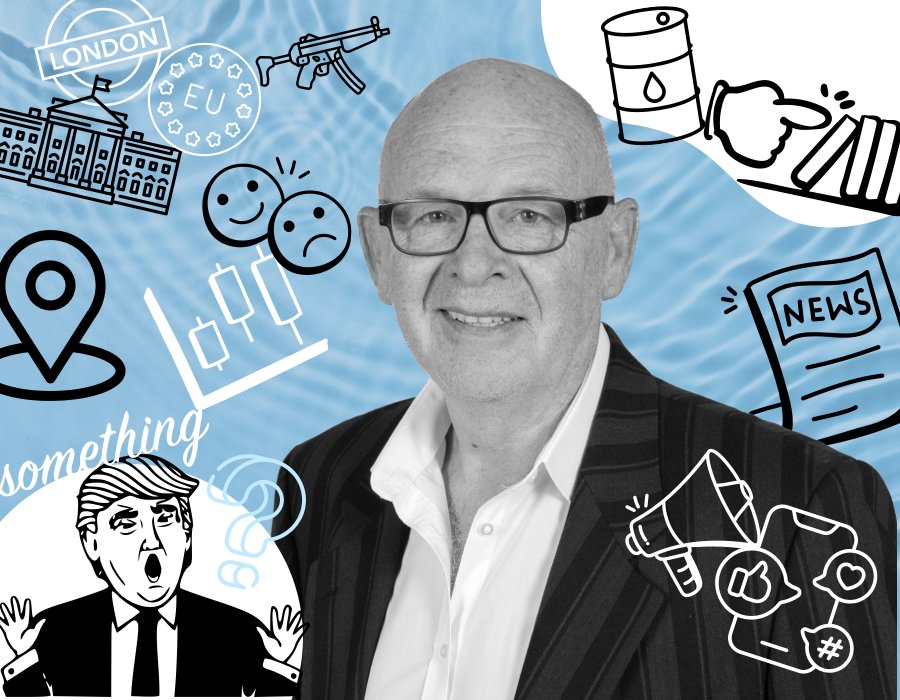
I won’t hide it – I’m comfortable with Trump back in the White House. In fact, I’d argue we’re better off with a businessman with backbone running the show than another polished career politician quietly managing decline.
Say what you like about him – and plenty do – but at least you know he’s going to do something. The problem is… for those of us who make a living speculating, that “something” changes by the hour. And that’s where it gets dangerous.
Nothing highlights this more than what’s currently unfolding in the Middle East. As a Trump-supporting Brit living in Europe, I’m constantly shifting my focus – Washington, Brussels, London. Three different narratives, three different agendas, and very little alignment between them. My frustrations with Europe are no secret. Democracy feels thinner, leadership weaker, and decision-making slower by the year. Against that backdrop, I still believe a Trump presidency could be a net positive for the West. But let’s not kid ourselves – the man is a volatility machine. And markets don’t price ideology. They price uncertainty.
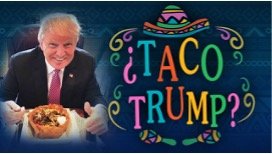
We saw that perfectly during the tariff saga. One day tariffs were on, the next day they were off, then back on again with a different number just to keep everyone guessing. It stopped being about economics and became a guessing game – what does Trump really mean, and how long will he stick to it?
Here’s the truth: he doesn’t have to stick to anything. And that’s the problem. Markets weren’t reacting to policy – they were reacting to noise. Headlines. Soundbites. Tweets. And we, as traders, fell straight into the trap.
I’ve seen this movie before. After five decades in this business, one thing is certain – uncertainty punishes the impatient. And yet, despite all the chaos, what actually happened? The tariffs stayed. The world didn’t end. And equities, after all the drama, carried on grinding higher. Which tells you everything you need to know. The volatility wasn’t just Trump – it was us. Our reactions. Our need to act. Our inability to sit still while the market worked things out. We weren’t trading the market. We were trading our own emotions.
Now, however, we’re dealing with something far more serious. Iran. This isn’t a trade dispute that can be negotiated over percentages and press conferences. This is real geopolitics, with real consequences, and it feeds directly into the one thing markets care deeply about – energy. Every major conflict hits energy markets. That’s not opinion – that’s fact. Supply gets threatened, prices spike, and suddenly inflation isn’t “under control” anymore.
We’ve already seen the reaction in oil. Sharp, aggressive, entirely justified in the short term. But here’s where people get hurt. Chasing those rallies is how accounts get wiped. Because just as quickly as tensions escalate, they can ease – or at least appear to. And when they do, the same traders who bought the highs are left scrambling for the exit. And hovering over all of this is Trump. Because you’re not just trading oil, or gold, or equities. You’re trading his next sentence.
One comment – one off-the-cuff remark – and the entire narrative shifts. What looked like a breakout becomes a trap. What felt like a safe haven turns into dead money overnight. You’re not trading markets. You’re trading mood. And that’s a very dangerous game.
I learned a long time ago – back during the Falklands – not to trade war. I made money on a long gold position, but it came off the back of real loss. The sinking of the HMS Sheffield wasn’t just a headline – it was a reminder that behind every “move” is something far more serious. That sticks with you.
It doesn’t mean we ignore the impact. We can’t. Conflict will ripple through every asset class. Equities will struggle under uncertainty. Commodities – particularly energy – will stay bid while supply remains in question. And currencies? It’s hard to see sustained strength in the euro or sterling when Europe is so heavily reliant on external energy. That’s the bigger picture. But the path from here? Completely uncertain.
And that’s where most traders go wrong – they try to impose certainty on a market that simply doesn’t have any. They trade what they think should happen. That’s how you lose money. In this environment, doing nothing is often the smartest trade on the book.
So, if you’re sitting there, tempted to have a punt based on the latest headline out of Washington, just pause for a moment. Because in this market, it’s not about what was said yesterday. It’s about what might be said next. And if you get that wrong, the market won’t forgive you.
It doesn’t care about your opinion. It only cares about your position.
Make sure you do too!
Please note the political opinions expressed above are those of the author himself, and do not necessarily reflect the opinions of JP Fund Services AS.
The post Trading with Trump in the White House: Opportunity or Sheer Stupidity? first appeared on JP Fund Services.
The post Trading with Trump in the White House: Opportunity or Sheer Stupidity? appeared first on JP Fund Services.
The post Trading with Trump in the White House: Opportunity or Sheer Stupidity? first appeared on trademakers.