
Another week in the wonderful world of capital markets, where investors are celebrating record equity prices, governments are borrowing money they haven’t got, central bankers are pretending inflation is manageable, and the Middle East continues doing its best to make oil traders rich and everyone else miserable. Meanwhile, artificial intelligence, apparently the greatest invention since sliced bread, is discovering that investors eventually expect profits rather than promises. Welcome to October, where common sense appears to have taken an extended holiday.
Let’s start with Wall Street. The S&P 500 and Nasdaq reached record closing highs on Tuesday, October 6, before rising bond yields reminded investors that borrowing money actually costs something. Both recovered to finish last week higher, but Monday brought renewed nerves and the S&P and Nasdaq slipped. Nevertheless, the American bull market has now celebrated its fourth birthday, having more than doubled since October 2022.
Not bad for an economy supposedly heading towards disaster every other Wednesday. The problem? Much of this remarkable performance depends on technology earnings continuing to justify increasingly ambitious valuations.
And that brings us to AI. NVIDIA and its semiconductor friends have been printing money faster than a desperate finance minister, but investors are starting to ask awkward questions. Chinese competition is improving, particularly in memory chips, while NVIDIA’s Chinese AI-chip market share reportedly fell to 34% during the first half of 2026. The sector suffered another selloff as doubts grew over the returns on enormous infrastructure investments. AI will undoubtedly transform the world, but that doesn’t mean every company spending billions on it deserves a ridiculous valuation. I remember the dot-com boom. Apparently, some investors don’t.
However, the really interesting action has been in government bonds. The American 10-year Treasury yield briefly reached 5.36%, a 24-year high, before retreating towards 5.19%. Governments have spent decades treating borrowing as an alternative to financial discipline, and bond investors are finally demanding compensation. France is particularly uncomfortable, with its debt problems undermining confidence in the euro. Politicians call this a challenging fiscal environment. I call it receiving the restaurant bill after ordering champagne on somebody else’s credit card.

Across the Atlantic, the euro briefly touched $1.1161, its weakest level in 17 months, before recovering towards $1.1190. Europe’s familiar combination of weak growth, expensive energy and political uncertainty is hardly inspiring confidence. Sterling has been steadier around $1.324, although Britain faces its own borrowing and inflation problems.
The FTSE 100, meanwhile, benefited from stronger financial shares as European equities rebounded on Tuesday.
Perhaps the biggest surprise is that Europe still manages to produce successful businesses despite politicians seemingly determined to regulate everything except their own spending.
Oil remains the geopolitical troublemaker. Brent climbed above $106 following attacks in Saudi Arabia, although prices subsequently eased. Trump’s proposed Russian diesel arrangements and talk of reducing regional tensions offered some encouragement, but oil traders increasingly want physical barrels rather than political promises. Elevated energy costs threaten inflation, consumption and corporate margins, especially in import-dependent Europe. One thing hasn’t changed: politicians can produce speeches almost indefinitely, but refineries cannot run on hot air.
Gold continues attracting attention around $4,180 an ounce, caught between geopolitical uncertainty and the uncomfortable attraction of higher bond yields. Bitcoin, meanwhile, has been trading around $82,000–$85,000, well below last year’s record. The cryptocurrency faithful remain enthusiastic, although recent price action suggests even digital gold isn’t immune to a strong dollar and expensive money. As for Tesla, shares closed Monday near $378, with investors still debating whether they’re buying a car manufacturer, an AI company or Elon Musk’s imagination.
Looking ahead, American inflation figures, retail sales, banking results and comments from Federal Reserve officials will determine whether markets can sustain their optimism. Goldman Sachs has already demonstrated that volatility can be extremely profitable for those collecting trading commissions. For everyone else, the question is whether earnings can overcome increasingly expensive capital.
My view? I really don’t want to keep riding a wave that has been roaring for far too long. So, while I am not abandoning equities completely, I’m becoming increasingly selective. Gold remains attractive as longer-term insurance, I have some, added at $4000 and will sit with it. If things improve next year, I cannot discount a break lower, possibly as low as $3600, But that is not going to squeeze me out. I have never trusted the EU, and I don’t plan on changing how I feel any time soon.
Oil offers opportunities for disciplined traders, and government bonds deserve considerably more attention than they’ve received for years. Yet, other than a small holding in Oil companies, I still plan on keeping some liquidity available, resist the temptation to chase every fashionable product – at least until after the mid-terms.
I am not saying there are not some excellent short term moves to exploit, there are plenty. But at the moment I prefer to keep my speculating to intra-day, and never keep a position over the weekend. Even when punting commodities, which as we expected have had a very good year.
I wrote recently about positioning in the current environment, which you can read here. And really not much has changed in my overview.
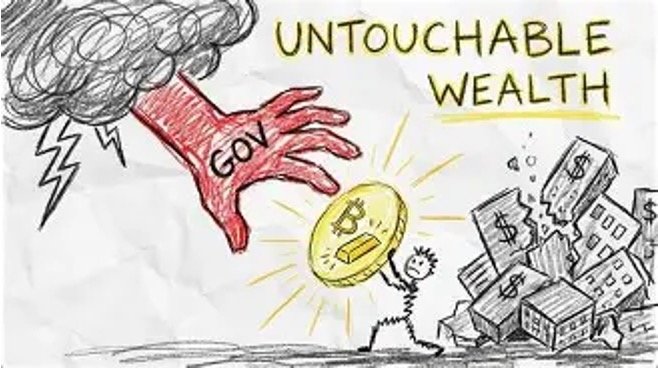
It is very true; our markets can remain irrational longer than expected. However, as we all know, and is becoming increasingly obvious, Governments, unfortunately, have turned irrationality into a permanent career.
Please note the political opinions expressed above are those of the author himself, and do not necessarily reflect the opinions of JP Fund Services AS.
The post Same Circus, Different Week – Only The Ticket Prices Have Risen! first appeared on JP Fund Services.
The post Same Circus, Different Week – Only The Ticket Prices Have Risen! first appeared on trademakers.