
The markets have spent the past week doing what they do best: changing their minds every five minutes.
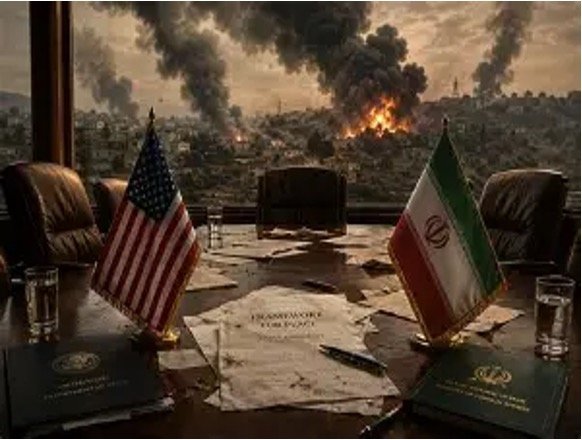
One day we’re told the world is ending because oil tankers cannot get through the Strait of Hormuz. The next day we’re told peace is breaking out across the Middle East and oil is heading back towards normality. Then a few hours later somebody from a central bank opens their mouth and traders suddenly remember interest rates still exist. In short, welcome to capital markets.
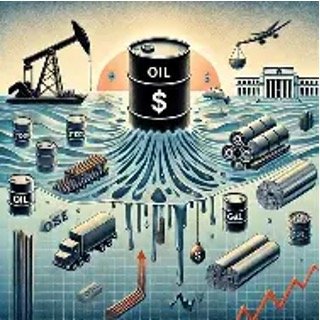
The biggest story remains the apparent progress in talks involving Iran. Whether this develops into a lasting agreement remains to be seen, but the market’s initial reaction was straightforward. Oil prices fell sharply as traders rushed to remove the geopolitical premium they had been adding for months.
Now, I’ve been around markets long enough to know that the first reaction is often the wrong reaction.
Yes, oil coming down is positive. Lower energy prices reduce inflation pressures. They lower transport costs. They help manufacturers. They reduce pressure on consumers. However, there is a difference between lower oil prices and cheap oil prices.
Many commentators are talking as though the energy crisis has vanished overnight. It hasn’t.
The Strait of Hormuz remains one of the most strategically important waterways on the planet. The region remains unstable. One missile, one drone attack, one diplomatic breakdown and the whole story changes again.
The market seems desperate to believe the problem has gone away. Personally, I’m not convinced. Not yet, anyway.
Meanwhile, the stock markets having pushed into new high-ground last week, appear to have run out of oxygen with the S&P 500 giving up over 200 points since then. AI has done all the heavy lifting for some time, but even the strongest of us needs a rest every now and then, and it looks like AI needs to pause and take time to re-evaluate.

We have discussed this for some time, that whenever a market becomes dependent upon a small number of stocks, it becomes fragile, and now it seems a lot more people have become nervous.
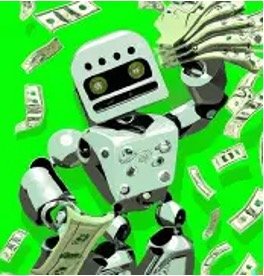
Every company has been claiming to be an AI company, and have had their analysts using AI to issue positive stories so they can raise more capital. But what I am seeing is a lot of presentations that suggest robots are being used to impress other robots.
Moreover, I will mention it again: Where is all this money coming from?
Capital is not infinite. When investors throw billions into AI infrastructure, data centres, chips, software and speculative technology projects, that money is not simultaneously flowing into industrials, retailers, small-cap stocks or traditional businesses.
The result is what we are seeing today. A market that looks healthy on the surface but is increasingly dependent upon fewer and fewer real leaders. This is a problem – and one not dissimilar from the one I saw before the internet bubble burst.
That doesn’t mean the AI boom is over. Far from it.
Artificial intelligence will almost certainly change the world. The question is whether investors have already priced in ten years of success before the first few years have even been delivered.
Over in foreign exchange markets, the US Dollar has reminded everyone why it remains king of the jungle.
Despite endless predictions of dollar collapse, de-dollarisation, BRICS currencies and assorted fantasies, money continues to flow towards the greenback whenever uncertainty rises.
We have been banging this drum for some time, and now looking at the tape, it was a noise worth making.
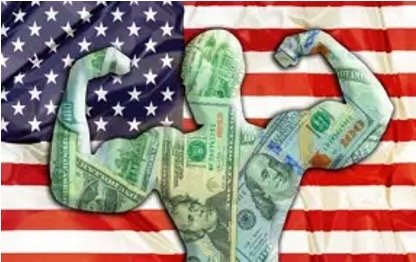
The story is, the dollar strengthened during the week as traders increasingly priced in the possibility that the Federal Reserve may need to keep monetary policy tighter than many had expected. There are always stories after the fact, justifying why a move has occurred, because “analysts” need to do their job. But when it is after the fact, its not analysis, its journalism. Investors need to know the difference.
In the EU there continues to be sluggish growth, high energy costs and political uncertainty. In disappearing Britain, the country is determined to continue its national hobby of changing political leaders before anybody has had time to unpack their boxes at Number 10. Another incoming Prime Minister, and another who has not been elected by the public.
Gold has had a more difficult week.
The metal has spent much of the year acting as both an inflation hedge and a geopolitical hedge. With oil falling and peace headlines dominating the news cycle, some of that fear premium has been removed. In addition, a stronger Dollar and higher interest-rate expectations make life more difficult for non-yielding assets such as gold.
That said, I wouldn’t write gold off. Indeed, I am sticking to my ideas in last week’s report.
Government debt continues to rise globally. Fiscal discipline remains largely absent. Central banks remain trapped between inflation and growth concerns.
The cryptocurrency market remains heavily influenced by liquidity conditions, risk appetite and sentiment. When optimism returns, Bitcoin behaves like the future of finance. When risk appetite disappears, it behaves like a highly leveraged technology stock. The long-term story remains, but questions are being asked.
So what should traders be watching now?
Ignore the noise and watch the money: Watch oil. Watch the Dollar. Watch bond yields.
If oil starts rising again, inflation concerns will return quickly.
If bond yields continue climbing, equity valuations become harder to justify.
And if the Dollar keeps strengthening, risk assets may discover that easy money is no longer as easy as they had hoped.
For now, markets are celebrating the possibility of peace. And let’s hope they’re right.
However, after fifty years in this business, I’ve learned that markets often become most dangerous when everybody starts feeling comfortable.
And right now, comfort levels appear to be rising far faster than certainty.
Please note the political opinions expressed above are those of the author himself, and do not necessarily reflect the opinions of JP Fund Services AS.
The post Peace, Panic and Expensive Dreams first appeared on JP Fund Services.
The post Peace, Panic and Expensive Dreams first appeared on trademakers.