

Please note the political opinions expressed below are those of the author himself, and do not necessarily reflect the opinions of JP Fund Services AS.
The investment landscape in 2025 has presented a fascinating paradox. While many individual investors have faced personal challenges, institutional capital has found remarkable opportunities in elevated market volatility and emerging structural shifts across global economies.
US Market Resilience and Policy Impact
The dollar’s recent weakness has provided tailwinds for US equity valuations, contributing to what many market participants view as a sustained risk-on environment. Since the current administration’s policy initiatives began taking shape, investor sentiment has shown measurable improvement, reflected in both consumer confidence indices and capital allocation patterns.

The market’s response to proposed trade policies, initially met with skepticism, has ultimately proven more resilient than many analysts predicted. While the so-called “Trump Tariffs” generated significant media attention and political debate earlier this year, their actual impact on equity performance has been relatively muted. The S&P 500’s continued upward trajectory suggests that investors are looking beyond near-term trade friction toward longer-term structural benefits.
The AI Investment Supercycle

Perhaps more significant than any single policy initiative is the artificial intelligence investment wave currently reshaping market dynamics. Major technology companies have committed unprecedented capital deployment—with aggregate AI infrastructure spending projected to exceed $4 trillion over the next several years. This represents one of the largest coordinated capital expenditure cycles in modern economic history.
Companies like Microsoft, Google, and Amazon continue to expand data center capacity at breakneck pace, while semiconductor leaders including NVIDIA and AMD have seen their valuations reflect this structural demand shift. The ripple effects extend beyond pure-play technology stocks into industrial equipment, real estate investment trusts focused on data centers, and even utility companies powering this digital transformation.
Alternative Assets in Flight-to-Quality
Gold’s performance this year has been particularly noteworthy, consistently breaking through previous resistance levels to establish new all-time highs. The precious metal’s strength reflects multiple converging factors: persistent geopolitical uncertainty, sovereign debt concerns, and ongoing monetary policy uncertainty across major economies.

Bitcoin, while receiving less mainstream media coverage than during its previous peak cycles, has demonstrated remarkable institutional adoption. Corporate treasury allocations, pension fund exposure, and the continued development of Bitcoin ETF products have provided a more stable foundation for digital asset valuations than the retail-driven volatility of earlier years.
Energy Market Dynamics
Suppressed energy costs have emerged as a significant economic tailwind, though benefits are unevenly distributed globally. US industrial competitiveness has improved markedly with lower input costs, while residential consumers have seen meaningful relief in utility expenses. This energy advantage has attracted manufacturing investment back to North American facilities, reversing decades of offshore migration.
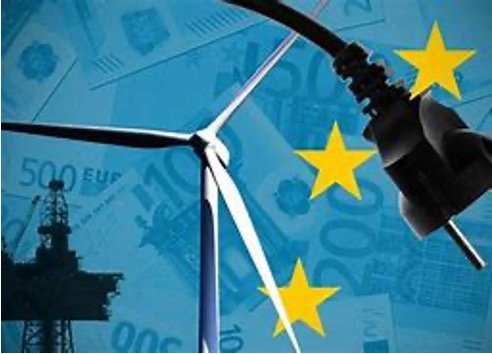
European markets present a stark contrast. Despite global energy price declines, consumer and industrial users across the EU continue facing elevated costs due to substantial energy taxation. Germany’s industrial output, for instance, has struggled to recover pre-2022 levels, with energy-intensive manufacturing particularly affected. Several major chemical and steel producers have announced facility closures or production shifts to lower-cost jurisdictions.
European Investment Climate Challenges
The European investment environment faces multiple headwinds that institutional allocators increasingly factor into their regional weighting decisions. Regulatory complexity, particularly around ESG compliance and digital services taxation, has created implementation costs that many multinational corporations find prohibitive.
Manufacturing competitiveness has deteriorated significantly, with many European producers now heavily dependent on Chinese supply chains while facing domestic cost structures that make finished goods uncompetitive in global markets. The automotive sector exemplifies this challenge, with traditional European manufacturers struggling to match Chinese electric vehicle production costs while meeting increasingly stringent EU regulatory requirements.

Immigration policy impacts on fiscal resources have become a measurable drag on European growth prospects. Several EU nations are allocating increasing portions of their budgets to integration services and social support systems, while infrastructure investment suffers from competing priorities.
Geopolitical Risk Assessment
Global conflict zones continue generating market uncertainty, though investors have shown remarkable ability to compartmentalize regional risks. Ukrainian reconstruction presents both challenges and opportunities, with significant infrastructure investment requirements that may benefit construction, engineering, and technology firms capable of operating in complex environments.
Middle Eastern dynamics remain fluid, though energy market stability has improved compared to earlier periods of regional tension. Chinese economic policy continues evolving, with recent stimulus measures suggesting leadership recognition of growth challenges while maintaining strategic technology investment priorities.
Investment Implications and Outlook
Capital migration patterns suggest investors are increasingly favoring jurisdictions offering regulatory clarity, competitive cost structures, and growth-oriented policies. This “voting with feet” phenomenon has accelerated wealthy individual relocations and corporate domicile changes, creating concentrated investment flows into preferred markets.
For institutional portfolios, this environment suggests maintaining overweight positions in US technology infrastructure plays, select emerging market growth stories, and hard assets including precious metals. European exposure may warrant more selective, tactical approaches focusing on companies with significant non-European revenue streams or those positioned to benefit from eventual policy corrections.

The investment community appears increasingly confident that current market dynamics will persist, supported by technological innovation cycles, demographic shifts, and policy environments that reward capital formation over capital redistribution.
The post Global Investment Outlook: Market Dynamics in 2025 first appeared on JP Fund Services.
The post Global Investment Outlook: Market Dynamics in 2025 appeared first on JP Fund Services.
The post Global Investment Outlook: Market Dynamics in 2025 first appeared on trademakers.