

For much of February, markets have felt as bleak as the weather — but the bigger story isn’t the gloom. It’s the reset.
Towards the end of January, we saw traders leaning aggressively in the same direction: long metals, long momentum, long “fear trades.” Then, as the month closed, everyone was reminded that markets exist to punish crowded positioning.
The shift wasn’t elegant. It was mechanical.

Precious Metals: This Was Forced, Not Fundamental
Gold didn’t fall because the long-term case suddenly evaporated. It fell because leverage became expensive.
The CME raised margin requirements again in early February amid rising volatility. That matters. Margin hikes don’t just “cool speculation” — they force behaviour. Traders either add capital, cut exposure, or get liquidated. And when too many are leaning the same way, the unwind gets violent.
Gold had printed a record high near $5,600 at the end of January. By mid-February it was trading more like a shaken heavyweight than a calm safe haven. That wasn’t a philosophical shift in the inflation outlook — it was positioning being flushed.
Here’s the key: these episodes tend to be cleansing rather than terminal. Secular moves don’t end because a trade gets crowded; they pause when the leverage is wrung out.
My view remains that this looks like a correction, not the final high. That doesn’t mean straight back up — it may take months to rebuild conviction — but structurally, the longer-term case hasn’t disappeared.
Oil: Supply vs Geopolitics
Energy this week offered a clean example of competing narratives.
On one side, the 2026 surplus story keeps resurfacing, limiting enthusiasm. On the other, geopolitics refuses to cooperate with the bearish case.

WTI has pushed back toward the mid-$60s after Russia-Ukraine talks broke down and U.S.–Iran tensions re-intensified. The market may talk oversupply, but traders are unwilling to remove the geopolitical risk premium entirely — particularly with sensitivity around transit routes like the Strait of Hormuz.
The result? Oil refuses to collapse.
In the short term I favour buying weakness rather than chasing spikes. Around current levels, $63, crude looks more interesting on dips than on rallies. However, medium term, I think resistance should come in if we reach into the low -$70s. Admittedly, we do need to get there.
Bitcoin: Still a Liquidity Asset?
Crypto has delivered another reminder of what it really is when liquidity tightens.
Bitcoin slid toward $60,000 during the washout, triggering roughly $2.6bn in leveraged liquidations before rebounding. That isn’t “store of value” behaviour. It’s a high-beta asset functioning as a liquidation engine when positioning is extended.
That said, nuance matters.
I hold a small allocation — not because I see it as stable, but because I see it as portable optionality. My interest isn’t short-term price swings. It’s long-term political risk.
If governments move further toward tighter financial control or restrictions on capital mobility — particularly in Europe — decentralised assets could regain structural demand. Ironically, crypto’s next sustained rally may only come when pressure on traditional ownership becomes visible.

We’re not fully there yet, so I will add if the decline continues.
The Dollar: A Crowded Weakness Trade
Dollar weakness had become the consensus.
After a multi-month slide, it became obvious for some that the dollar was due for a near-term reprieve. That doesn’t automatically signal a reversal, but crowded narratives rarely stay profitable indefinitely.
That said, If you want to get structurally bullish USD, EUR/USD likely needs to roll over more decisively than it has. Until then, caution is sensible. The story may be priced in more than traders assume.
Equities: Strength With Caveats
The FTSE has shown resilience — but look under the bonnet.
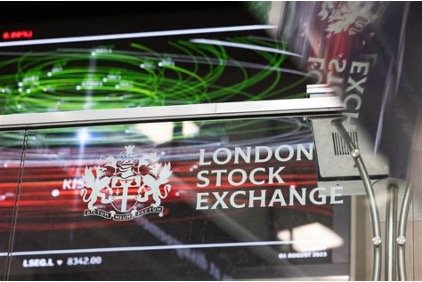
Strength has been driven largely by multinationals and defence exposure rather than domestic British momentum. BAE Systems reported record sales and backlog this week, underscoring how defence spending — not UK growth — is doing much of the lifting.
Sterling weakness supports exporters. That helps headline index performance. But it doesn’t fix structural issues.
Political stability in the UK remains uncertain, and European fragility continues to simmer beneath the surface. Reports of Christine Lagarde potentially leaving the ECB before her term ends were quickly tempered by ECB officials, but the fact that such speculation gains traction reflects underlying unease. In my view, Lagarde will probably be in her position long after the current UK Prime Minister is forced to leave No 10.
But the problem in Europe is not about who is in charge of what, it’s more about the direction we are being dragged by people we don’t know!
What This Week Really Said
Strip away the noise and the message is clear:
- Metals fell because leverage got expensive.
- Crypto fell because leverage got punished.
- Oil rose because geopolitics refuses to behave.
This wasn’t a macro shift driven by elegant central bank narratives. It was a positioning reset driven by plumbing and politics.
Positioning From Here
For short-term traders, this is a “respect the range” phase. After forced liquidation events, markets typically compress, rebuild structure, then expand again. So Let breakouts prove themselves.
For longer-term investors, February’s weakness may look less like a warning and more like an opportunity — provided sizing is sensible and expectations realistic.
I haven’t changed my broader view: commodities remain relevant in a world where fiscal strain, political instability, and currency management are becoming features, we just have to get in before the herd arrives.
February hasn’t been the end of anything.
When we look back, it may prove a reminder that leverage may distort timing— but it rarely changes direction.
Time will tell.
Please note the political opinions expressed above are those of the author himself, and do not necessarily reflect the opinions of JP Fund Services AS.
The post A Change in Direction, Or Simply a Reset Before the Next Leg? first appeared on JP Fund Services.
The post A Change in Direction, Or Simply a Reset Before the Next Leg? appeared first on JP Fund Services.
The post A Change in Direction, Or Simply a Reset Before the Next Leg? first appeared on trademakers.