

It’s been one of those weeks where the markets are trying to price not just a war, but the politics around it. And as any trader will tell you, geopolitics tends to arrive with a lot of variables and very little clarity.
When the United States and Israel launched their strikes on Iran on February 28, the immediate focus in markets was obvious: oil, inflation risk, and the potential for a wider regional conflict. But as the dust settled, another story began to emerge – one that matters particularly from a European perspective.
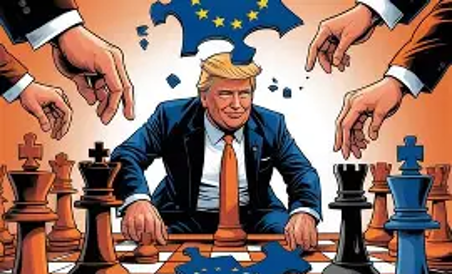
Europe, notably Socialist Spain and the UK, have been extremely reluctant to get directly involved.
Now, that hesitation isn’t particularly surprising. European governments have spent the better part of two decades dealing with the consequences of Middle Eastern conflicts, both politically and economically. Energy dependence, refugee flows, and domestic political divisions mean that European leaders tend to approach military escalation against Islamic regimes with a level of caution that often frustrates Washington.
And this time appears to be no different.
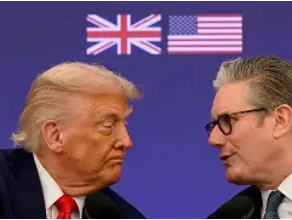
While the United States moved quickly alongside Israel, European capitals have largely confined themselves to diplomatic language – calls for restraint, de-escalation, and the usual appeals to international law. The UK has offered political support and intelligence cooperation, but there’s been little appetite for anything resembling a major military role.
From a purely political standpoint, you can understand the calculation.
Most European economies are only just stabilizing after several difficult years of inflation shocks and energy crises. The last thing many governments want is another conflict that could push oil prices sharply higher or destabilise already fragile political coalitions at home.
But this cautious stance has reportedly irritated President Trump.
Trump has never been shy about expressing his views on burden-sharing within NATO, and the fact that now the United States is being refused help during this Middle Eastern conflict appears to have struck an even more painful nerve. Several commentators in Washington have already suggested that Europe’s reluctance could complicate future cooperation across the Atlantic.
In other words, the war itself may eventually end – but the political consequences could linger much longer.
From a market perspective, this dynamic matters more than it might first appear.
For decades, the transatlantic alliance has been one of the stabilising forces in global geopolitics. When Washington, London, and Brussels broadly move in the same direction, markets tend to find reassurance in that unity.
When they don’t, uncertainty increases.
That doesn’t mean a dramatic rupture is imminent. The economic ties between the United States and Europe remain enormous, and security cooperation is deeply embedded. But even a subtle cooling of relations can influence trade policy, defence spending, and regulatory cooperation – all of which ultimately feed into capital markets.
Meanwhile, the energy story continues to dominate the immediate market reaction.
Oil remains the most sensitive asset to developments in the conflict. Prices surged sharply during the early stages of the fighting as traders priced in potential disruption to the Strait of Hormuz. That fear briefly pushed Brent toward $120 a barrel before easing back toward the high-$80s once it became clear that shipping routes had not yet been severely disrupted.
The International Energy Agency’s discussion of a potential emergency release of strategic reserves also helped calm nerves.
Still, the market is maintaining a noticeable geopolitical risk premium. Traders know that if the conflict spreads or if Gulf shipping lanes come under sustained threat, oil could move sharply again.
European markets, unsurprisingly, feel this pressure more acutely than the United States.
Energy costs flow quickly into Europe’s industrial economy, and any sustained rise in oil or gas prices risks reigniting the inflation concerns that policymakers have only recently begun to bring under control.
The equity markets have reflected this uncertainty.
U.S. indices have been volatile but relatively resilient, supported by strong corporate earnings and the sheer depth of American capital markets. European equities, by contrast, have been somewhat more fragile, with investors more sensitive to energy price swings and trade disruption.
That divergence is not unusual during geopolitical crises.
Meanwhile, the traditional safe havens are behaving largely as expected. Gold remains elevated near historic highs, while the U.S. dollar has benefited from the familiar flight toward liquidity and stability.
If there’s one lesson markets have reinforced over the past couple of weeks, it’s that geopolitical events rarely unfold in isolation. Military developments, political relationships, energy markets, and central bank policy all end up feeding into one another.
Right now, we’re seeing exactly that web of influences.
Oil prices are fluctuating with every military headline. Central banks are quietly reassessing their inflation outlooks. And politicians on both sides of the Atlantic are beginning to debate the legality of this war, and the cost on the global economy.

From a European perspective, the cautious approach taken by London, Madrid and Brussels may make political sense domestically. But it also risks creating more friction with Washington at a time when Western unity – which has long been a cornerstone of global stability until Trump – is already very fragile.
For investors, that’s worth keeping an eye on.
Because while wars eventually end, diplomatic tensions – especially between allies – can sometimes linger much longer. And markets, as we all know, have a habit of pricing those shifts long before they fully appear in the headlines.
For now, the best approach remains the same as ever: stay alert, stay flexible, and remember that when geopolitics takes the wheel, the markets rarely drive in a straight line.
Please note the political opinions expressed above are those of the author himself, and do not necessarily reflect the opinions of JP Fund Services AS.
The post War Premiums, Political Friction, and Europe’s Delicate Balancing Act first appeared on JP Fund Services.
The post War Premiums, Political Friction, and Europe’s Delicate Balancing Act appeared first on JP Fund Services.
The post War Premiums, Political Friction, and Europe’s Delicate Balancing Act first appeared on trademakers.